– Multicentre 12-month RCT in 139 participants shows remote monitoring (RM) can support clinical decision-making in the care of patients with interstitial lung disease (ILD)
– RM increased availability of contemporaneous lung function data at patients’ clinic review to 92% (vs. 28% in usual care group, p<0.001)
– RM identified changes in clinical parameters between pre-scheduled visits in 8.3% of patients, resulting in medicine initiation (3.3%) & oxygen assessment (5%).
– 80.8% median adherence to weekly spirometry at 12 months
Individualised patient care informed by recent lung function test results (LFTs) is essential in ILD. But capacity challenges & patient burden means contemporaneous LFTs are often unavailable at the time of patient review.
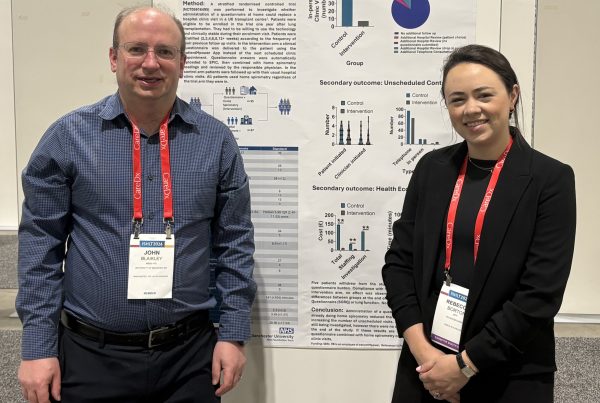
RCT data presented British Thoracic Society (BTS) today show the addition of remote monitoring significantly increased the availability of recent LFTs at the time of patient review compared to standard care alone, from 28% to 92%, supporting appropriate & timely clinical decision-making for optimised patient care. It also enabled early interventions, including medication initiation and oxygen assessment in 8.3% of patients, through the identification of changes in care needs between patients’ scheduled visits.
RCTs, the gold standard of clinical evidence, remain a rarity in digital health. The robust methodology of REMOTE-ILD gives these findings particular importance, and significantly strengthens the ever-growing evidence base for the use of remote monitoring in ILD, supporting wider adoption in routine clinical practice.