Innovations in Lung Transplant Series #1: Hybrid Care
With the International Society of Heart and Lung Transplantation (ISHLT) 2026 Annual Meeting only a few weeks away we wanted to take a look ahead at the some of the innovations and research which will help shape the future of lung transplant care.
Lung transplantation is a life-extending intervention for those with end-stage respiratory conditions, but it is far from the end of patients’ need for long-term and specialised care. Lung transplant recipients are at high risk of complications, such as infection and rejection, with chronic lung allograft dysfunction (CLAD) being a key reason why median survival is lower than other solid organ transplants. Rapid identification is key to management and improved outcomes.
As a result, standard care post lung transplant requires intensive monitoring in out-patient clinics, with even stable patients being reviewed at around 3 monthly intervals. These frequent clinic visits place a huge strain on patients, clinicians, and the transplant service’s capacity and budget. Despite such regular visits complications may arise and progress quickly, with adverse patient outcomes. To address this, home spirometry is now used in several transplant centres to enable early identification of lung function decline and rapid patient triage.
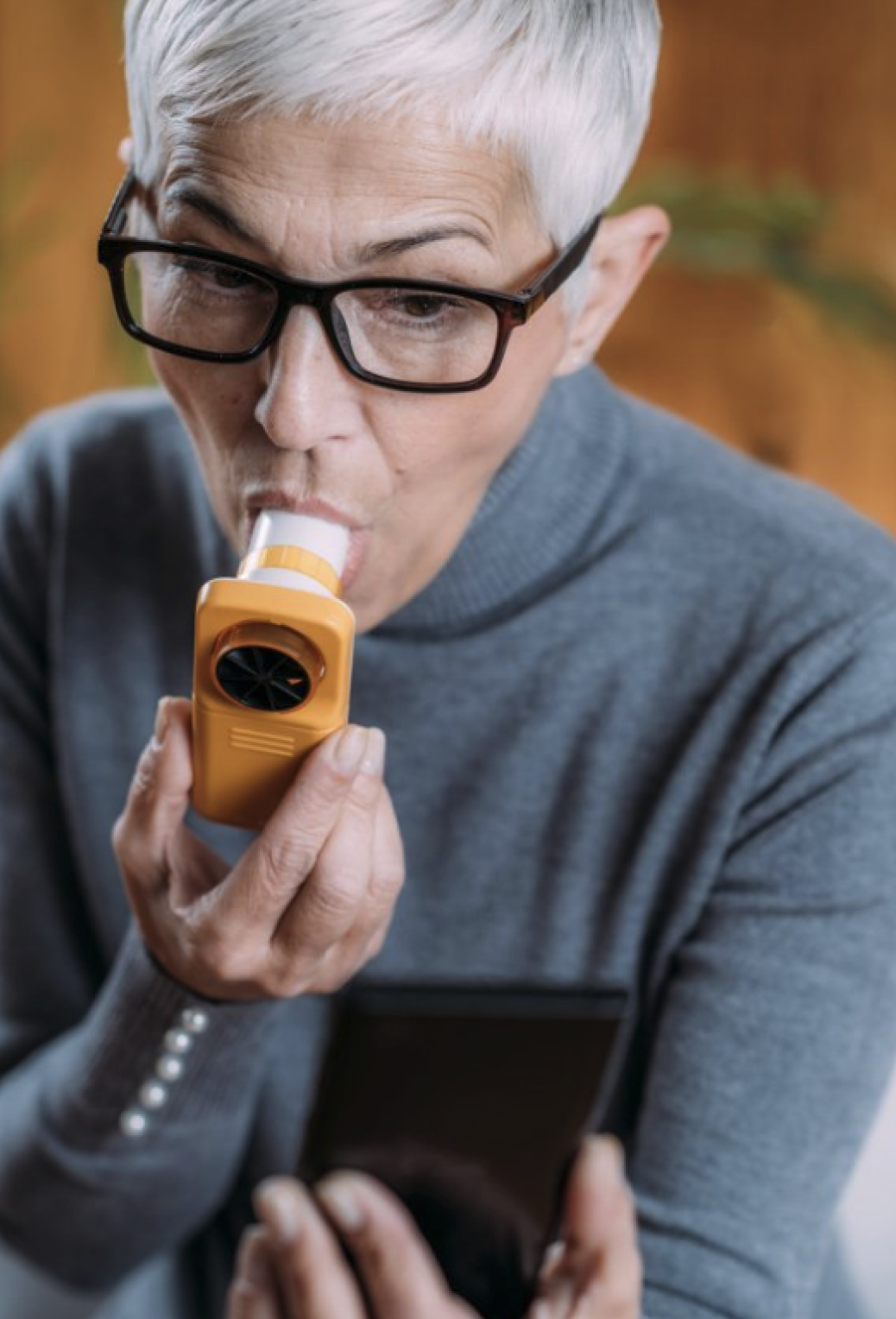
Home spirometry has become standard in many transplant centres – but could remote questionnaires further improve care?
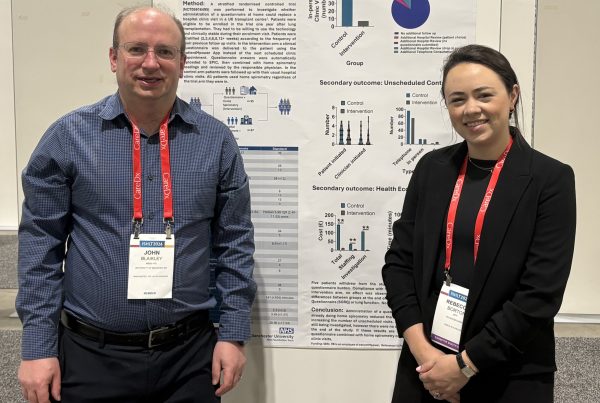
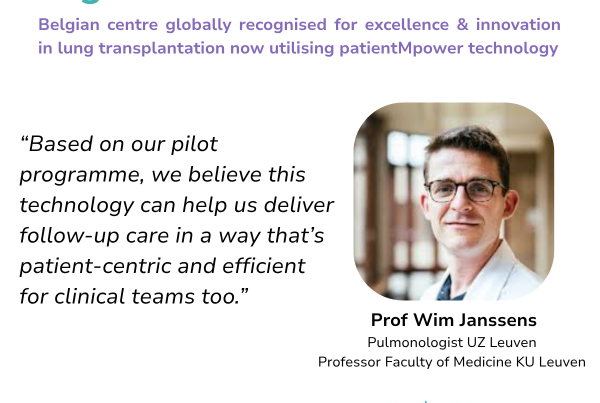
Case studies from individual transplant centres, and learnings from the COVID-19 pandemic, suggest that there may be a role for remote monitoring beyond spirometry alone to further improve post lung transplant care delivery – reducing the need for clinic visits by enabling patients to be comprehensively assessed at home. The results of a randomised controlled trial, which has been accepted for presentation at ISHLT 2026, will soon provide definitive evidence on the utility, acceptability and cost-effectiveness of a digitally-enabled hybrid approach to lung transplant care.
The study, conducted with the University of Manchester, compared clinic-based care plus home spirometry (standard care) versus digitally-enabled hybrid care in patients who had undergone lung transplantation. At the start and end of the study patients in both arms were seen in the clinic. At the intervening scheduled visit those in the control arm attended the clinic as normal, but in the hybrid care arm the visit was replaced with clinician review of data collected by a specialised lung transplant digital health solution (patientMpower). This solution enables comprehensive remote monitoring of multiple clinical parameters, as well as patient reported outcome measures (PROMs). These PROMS when combined with home spirometry provide additional information and therefore could potentially be used as a substitute for a standard outpatient appointment.

Dr John Blaikley
Dr John Blaikley, Principal Investigator and Senior Lecturer/ Honorary Consultant in Lung Transplantation at University of Manchester, explains the rationale underpinning this research;
“Home spirometry only records information about lung function, preventing it from detecting other changes in a lung transplant recipients’ health. Therefore, patients still need to be seen on a regular basis in the lung transplant unit. This could potentially be partially avoided if a patient-reported outcome measure (PROM) was administered alongside home spirometry.
“We hypothesised that digitally-enabled hybrid care will reduce the requirement on transplant patients to attend hospital without affecting patient outcomes. This will hopefully help patients to continue to live their normal lives by minimising disruption and time for hospital appointments. Patients also will hopefully value engaging with the hybrid platform when it suits them, as opposed to being told when they had to engage for hospital visits. This approach could also help healthcare providers, by releasing capacity so that urgent patients can be seen and reducing healthcare delivery costs.”
It’s potentially exciting news for the lung transplant community. If proven, hybrid care could help patients avoid the high travel costs and time commitment of clinic attendance, whilst freeing up clinical capacity. The protocol for the study, which is a collaboration between patientMpower, University of Manchester, University College London and patient organisation New Start, has already been published. Research findings will be initially presented at ISHLT in April, with full publication planned thereafter.